


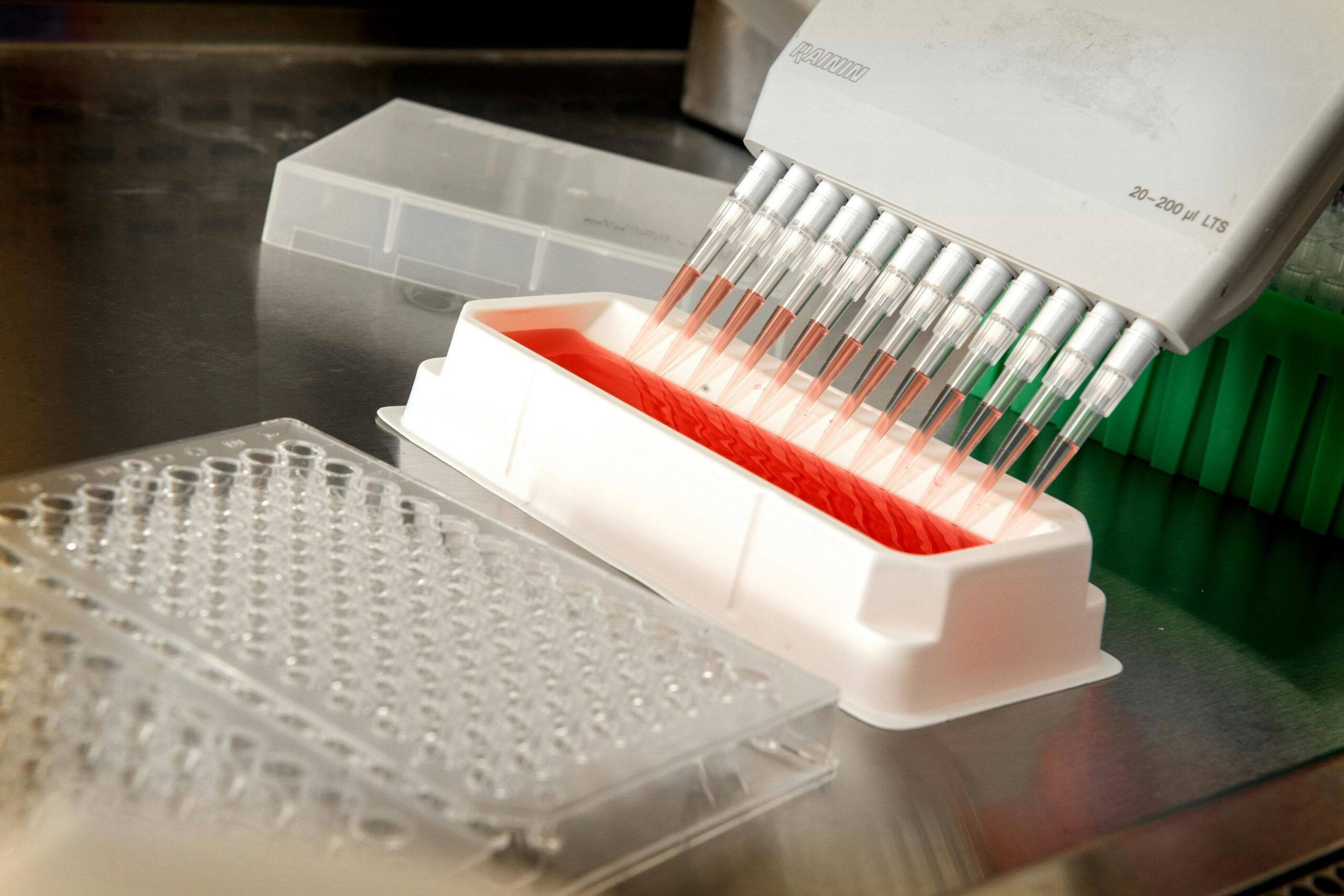
A 96-well plate is among the most widely utilized laboratory tools in scientific research, medical testing, biotechnology, and diagnostic applications. This plate features 96 individual wells arranged in a grid format, enabling researchers to conduct multiple experiments or tests concurrently. Its widespread adoption in laboratories stems from its ability to enhance efficiency, conserve reagents, and facilitate high-throughput testing.
The increasing demand for precise laboratory analysis has significantly boosted the popularity of the 96-well plate in research facilities globally. Whether employed in cell culture, ELISA testing, PCR preparation, or sample storage, this laboratory tool offers convenience and consistency for scientists and technicians alike.
What Is a 96-Well Plate?
A 96-well plate is a flat laboratory device that contains 96 individual wells organized into 8 rows and 12 columns. Each well serves as a small container for samples, chemicals, or biological materials designated for testing and analysis.
Typically constructed from plastic materials such as polystyrene or polypropylene, the choice of material is influenced by the specific laboratory application. Some plates are transparent to facilitate optical analysis, while others are engineered for chemical resistance or long-term storage.
The standardized design of the 96-well plate ensures compatibility with automated laboratory equipment, including robotic pipetting systems, microplate readers, and incubators.
Main Uses of a 96-Well Plate
ELISA Testing
One of the primary applications for a 96-well plate is in ELISA testing (enzyme-linked immunosorbent assay), which is employed to detect proteins, antibodies, hormones, and infectious diseases. Each well can host a distinct reaction, allowing laboratories to process numerous samples simultaneously, thereby enhancing testing speed and productivity in diagnostic settings.
Cell Culture Applications
Researchers frequently utilize 96-well plates for the growth and study of cells. The individual wells enable scientists to observe various experimental conditions within a controlled environment. These plates are often treated to enhance cell attachment and growth, making them valuable in drug development, cancer research, and tissue engineering studies.
PCR and Molecular Biology
In molecular biology laboratories, 96-well plates facilitate polymerase chain reaction (PCR) procedures and DNA analysis. The plate format allows for efficient organization of multiple genetic samples. PCR-compatible plates are specifically designed to endure temperature fluctuations during thermal cycling, ensuring accurate and reliable experimental results.
Sample Storage
Many laboratories use 96-well plates for the storage of liquid samples, chemicals, or biological materials. Secure sealing options help prevent contamination and evaporation during storage, simplifying sample tracking and enhancing laboratory workflow.
Features of a 96-Well Plate
Standardized Layout
The uniform arrangement of 96 wells is a key feature of the 96-well plate. This standardized format ensures compatibility with a wide array of laboratory instruments, allowing scientists to transfer samples between machines without the need for special adapters or modifications.
High Throughput Capacity
A significant advantage of the 96-well plate is its capacity to process numerous samples simultaneously. Laboratories handling large volumes of tests benefit from increased efficiency and reduced manual labor, making high-throughput testing particularly valuable in pharmaceutical research and clinical diagnostics.
Chemical Resistance
Many 96-well plate products are constructed from materials that resist chemicals and temperature variations. For instance, polypropylene plates are commonly used for handling harsh solvents or storing samples at low temperatures, thereby maintaining sample integrity during experiments.
Optical Clarity
Certain applications necessitate clear wells for optical measurements. Transparent plates facilitate absorbance, fluorescence, and luminescence readings in microplate readers. High optical clarity enhances data accuracy and supports reliable analysis.
Easy Automation
Modern laboratories frequently employ robotic systems for repetitive tasks. The design of the 96-well plate accommodates automation, allowing for precise liquid handling and expedited experimental processing. This automation minimizes human error and improves consistency across multiple experiments.
Benefits of Using a 96-Well Plate
Improved Laboratory Efficiency
The capability to analyze numerous samples simultaneously conserves both time and resources. Rather than conducting separate tests individually, scientists can execute dozens of reactions at once, contributing to the 96-well plate’s status as a standard laboratory tool.
Reduced Reagent Consumption
Since each well holds a relatively small volume, laboratories utilize fewer reagents and chemicals during testing. This not only reduces operational costs but also minimizes waste, making experiments more environmentally friendly.
Better Experiment Organization
The structured arrangement of rows and columns allows researchers to clearly label and organize samples. This organization reduces confusion and enhances data tracking during extensive experiments. Many laboratories also implement barcode systems to facilitate sample identification.
Versatility Across Scientific Fields
The 96-well plate proves beneficial across various scientific disciplines, including microbiology, immunology, pharmacology, genetics, and environmental science. Its versatility renders it an essential component in both research and clinical laboratories.
Types of 96-Well Plates
Flat Bottom Plates
Flat bottom plates are predominantly used for optical measurements and cell culture applications, as their design supports even light distribution and accurate readings.
Round Bottom Plates
Round bottom plates are ideal for mixing and sample collection, with their curved shape concentrating liquids at the center of each well.
V-Bottom Plates
V-bottom plates are commonly used for sample recovery and centrifugation, as their pointed bottom efficiently collects small liquid volumes.
Deep Well Plates
Deep well variants of the 96-well plate provide greater storage capacity, making them suitable for sample preparation and compound storage applications.
Choosing the Right 96-Well Plate
Selecting the appropriate 96-well plate is contingent upon the intended laboratory application. Researchers should consider factors such as material type, well shape, volume capacity, and compatibility with laboratory instruments. Sterility is also a crucial consideration for biological experiments, as sterile plates help prevent contamination and enhance experimental reliability. Laboratories utilizing automated systems must ensure that the plate dimensions align with equipment specifications.
Final Thoughts
The 96-well plate is integral to contemporary laboratory operations. Its organized design, high-throughput capabilities, and compatibility with advanced instruments establish it as a fundamental tool for scientific research and diagnostic testing. From ELISA testing to molecular biology and cell culture, the 96-well plate accommodates a broad spectrum of laboratory applications. Its efficiency, versatility, and cost-saving benefits continue to affirm its status as one of the most valuable tools in research environments worldwide.



Leave a Reply